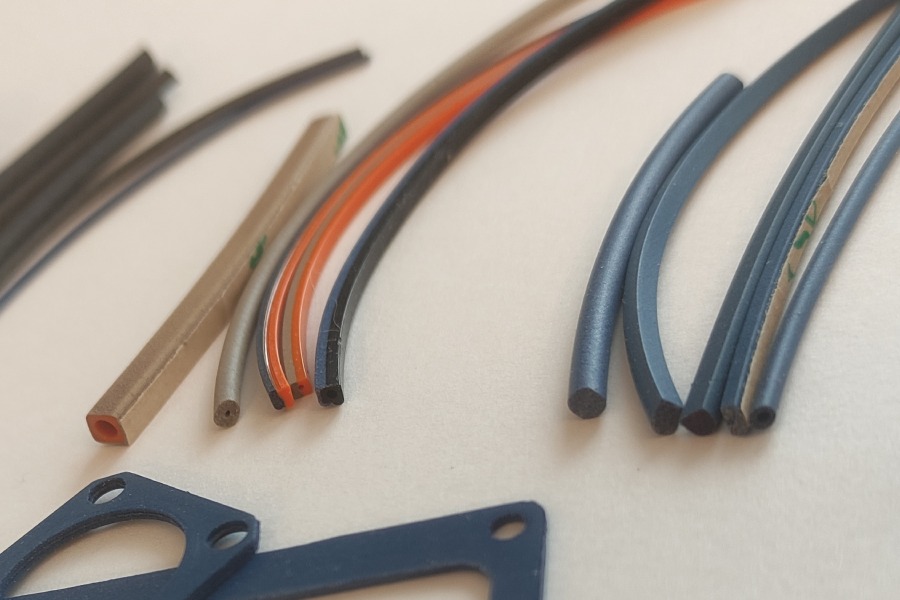
A conductive silicone gasket does two jobs with one part. It closes the electrical gap between a cover and its housing, so the enclosure behaves as a continuous shield, and it seals the same joint against water, dust and humidity. That is why it is often chosen where a separate EMI gasket and a rubber seal would not both fit.
The material is an electrically conductive silicone: a silicone elastomer loaded with conductive particles such as nickel-graphite, silver-glass, silver-aluminium or silver-copper. The particles carry the current; the silicone keeps the gasket soft and elastic. You will also find it called a conductive elastomer gasket or simply a conductive gasket.
✅ Key properties
- Shielding effectiveness: 40 to 110 dB from 20 MHz to 10 GHz, depending on the filler.
- Operating temperature: from −55 °C up to +125 °C to +200 °C, depending on the filler.
- Volume resistivity: from 8 Ω·cm for carbon down to 0.001 Ω·cm for low-density silver.
- Hardness: 45 to 85 Shore A.
- Environmental sealing: with proper compression, the gasket can keep out rain, pressure washing and temporary immersion (up to IP67 / NEMA 6).
- Ageing: silicone resists ageing and weathering; a conductive fluorosilicone version adds chemical resistance.
🧪 Choosing the conductive filler
The filler decides most of what the gasket can do. Three questions usually settle the choice: how much attenuation the enclosure needs, what metal the gasket will sit against, and how hot the joint gets.
- Carbon: 40 dB and 8 Ω·cm. The lightest compound (specific gravity 1.2), for grounding and moderate shielding needs.
- Nickel-graphite: 80 dB and 0.1 Ω·cm, up to +200 °C. A widely used grade that avoids the cost of silver.
- Silver-glass, silver-aluminium and silver-copper: 110 dB, with resistivity between 0.004 and 0.008 Ω·cm. Silver-copper is offered in three hardnesses (65, 75 and 85 Shore A) and is limited to +125 °C.
- Silver-nickel: 100 dB and 0.005 Ω·cm, up to +180 °C; the densest compound (specific gravity 4).
- Low-density silver: 80 dB with the lowest resistivity of the range (0.001 Ω·cm) and the softest compound, at 45 Shore A.
The filler also has to suit the metal of the flange and its finish, because two dissimilar metals in contact can corrode in a damp environment. Tell us the flange material with your request and we take it into account in the grade we propose.
📑 MIL-DTL-83528 material types
MIL-DTL-83528, formerly MIL-G-83528, is the US military specification used worldwide to classify conductive elastomers. Each silver-based compound in our table corresponds to one or more of its material types: M for silver-glass, L for silver-nickel, B and D for silver-aluminium, A, C and K for silver-copper, J for low-density silver. The letter tells you which family a compound belongs to and makes it easier to compare suppliers. It is not a qualification certificate; if your project calls for one, say so in your request.
🔧 Shapes and sizes
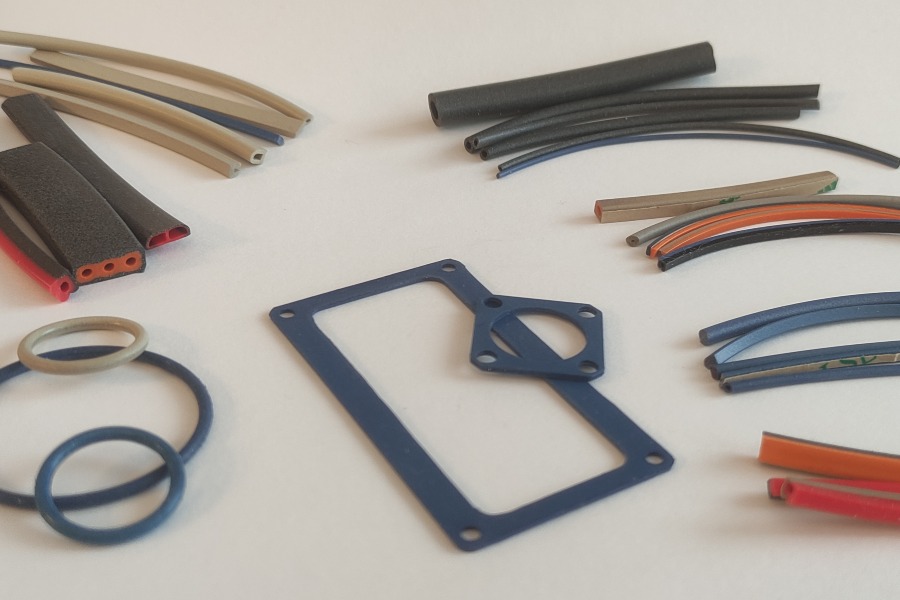
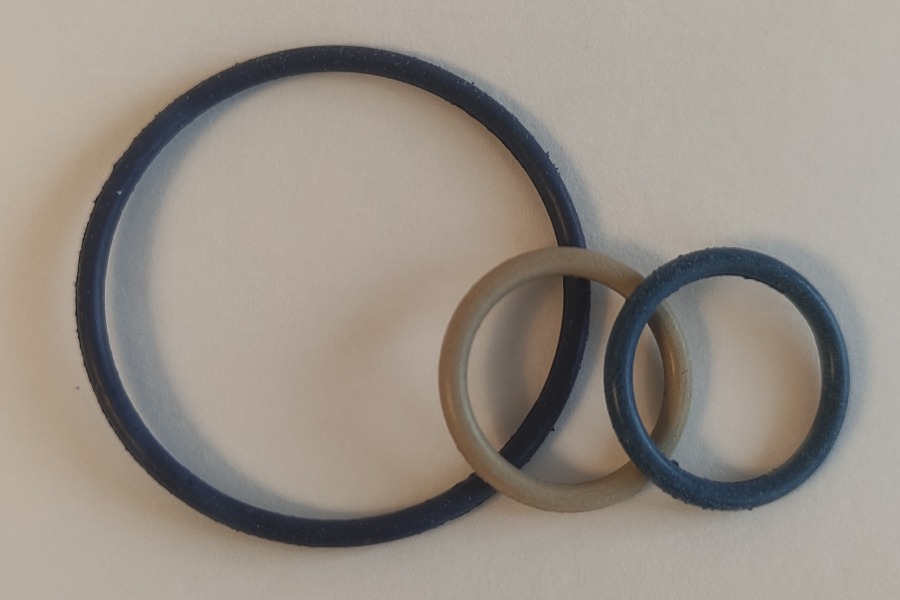
- Solid cord and conductive O-rings: round sections from 1.02 to 6.35 mm in diameter, supplied by the metre or made into rings to your dimensions.
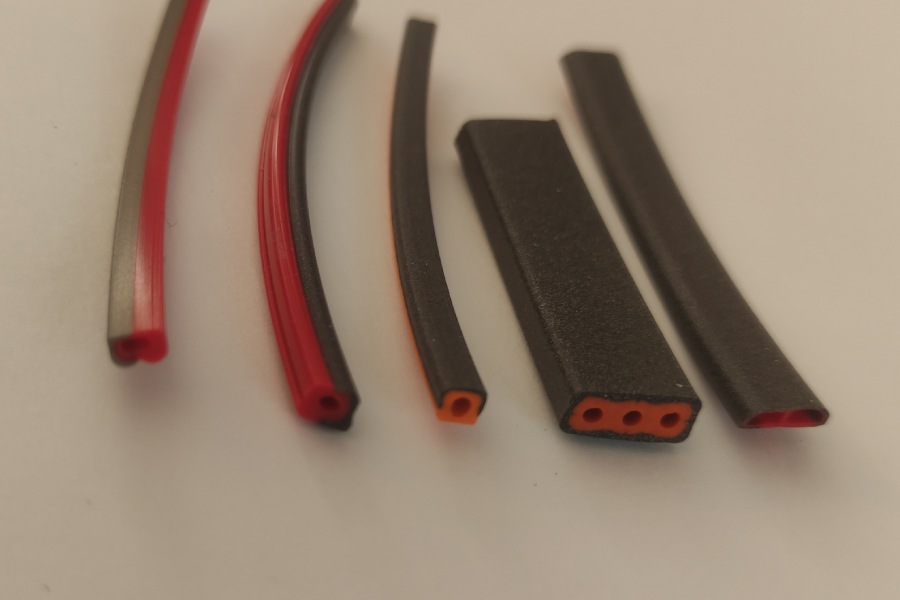
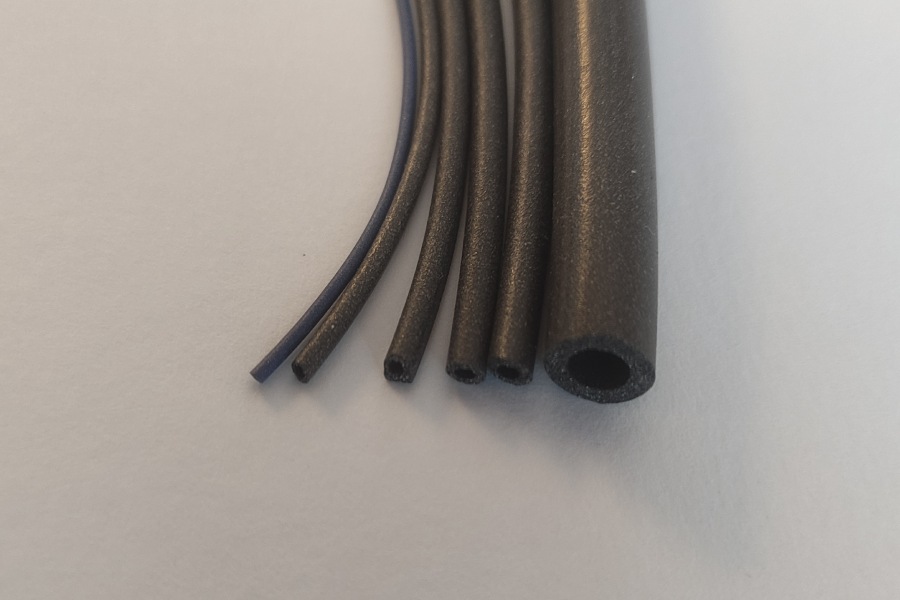
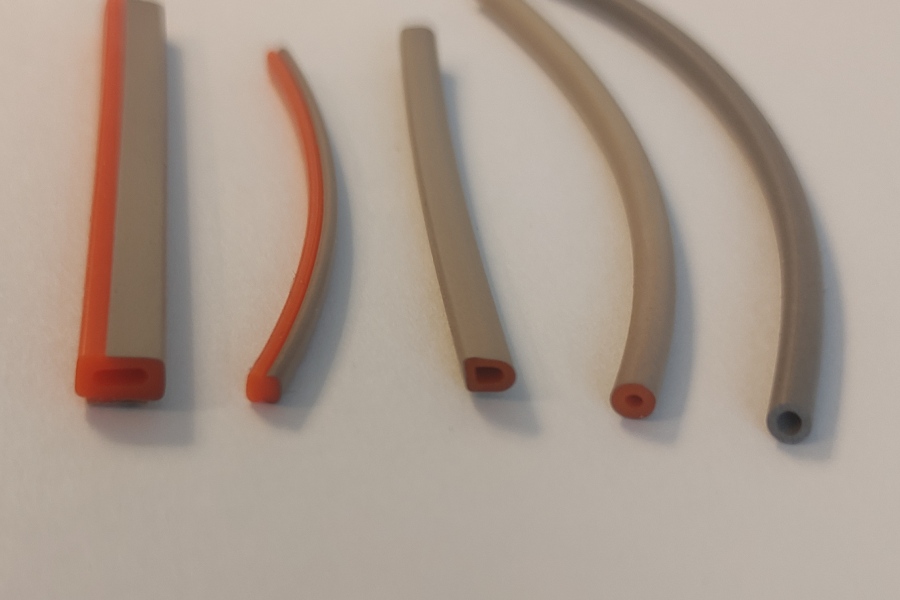
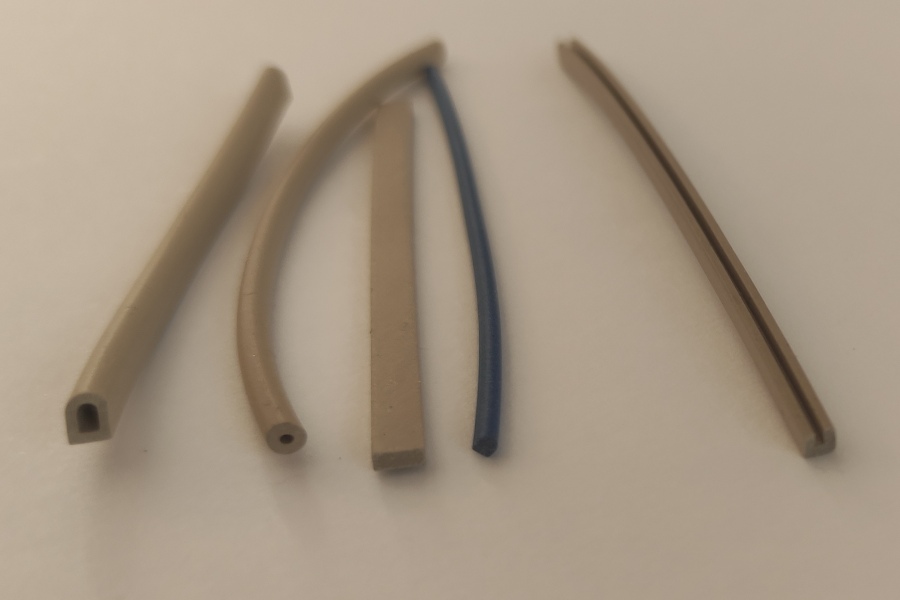
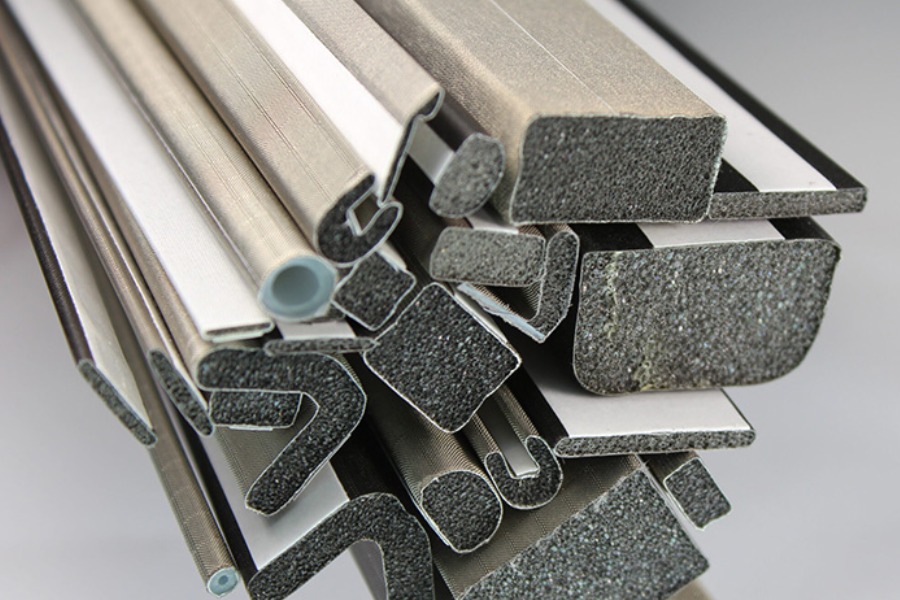
- Hollow profiles: round tubes from 2.29 to 11.10 mm outside diameter, hollow D and hollow rectangular sections, for covers that close with little force.
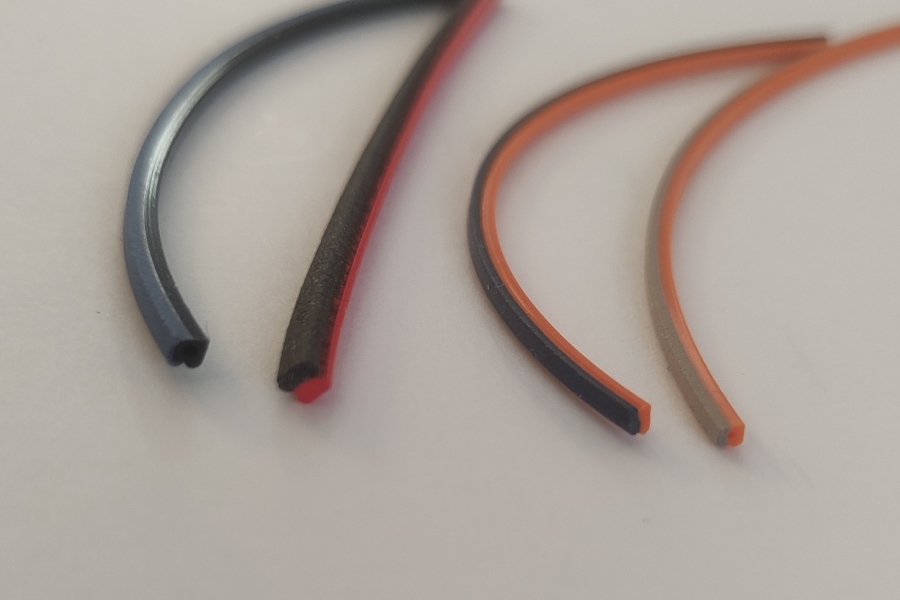
- D, P, U and rectangular strips: for grooves, door edges and flanges.
- Conductive silicone sheets: 0.51, 0.81, 1.02 and 1.57 mm thick, in formats from 254 × 254 mm to 457 × 457 mm.
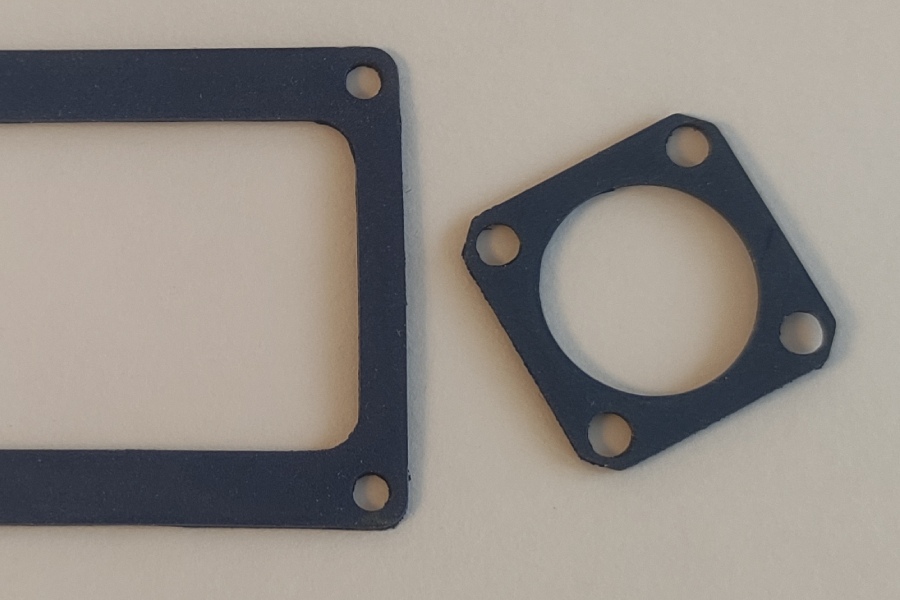
- Flat gaskets cut from sheet: to your drawing, with or without fixing holes.
- Moulded parts: for shapes that cannot be extruded or cut.
For most round, D and hollow profiles we can give the recommended groove width and depth with the quote, so the gasket is compressed correctly from the first prototype.
🛠️ Gaskets made to your specification
The profiles and sheets above are where most projects start, and many stop there. If yours does not, send us the drawing or the characteristics you need – filler, hardness, section, length, shielding level, temperature, fluid resistance, quantity – and we look for the reference that matches. Extrusion, moulding, die-cutting and water-jet cutting are all possible, from a prototype to production runs. The datasheet of the proposed reference comes with the quote.
📏 Compression and groove design
A conductive elastomer only shields and seals when it is compressed, and only within limits. Too little and the particles do not make reliable contact with the flange; too much and the gasket is damaged, its contact resistance rises and shielding drops. For solid profiles the usual working range is 10 to 20 % of the gasket height. Hollow profiles accept more deflection for less closing force, which helps on thin covers and widely spaced screws.
A groove, or a compression stop, is the simplest way to keep the gasket inside its range whatever the screw torque. Leave room in the groove for the material to move: silicone changes shape under load but not volume.
💧 Sealing against water and dust
With proper compression, a conductive silicone gasket can seal out rain (NEMA 3), withstand pressure washing (IP65, IP66, NEMA 4X) and resist water ingress during immersion (IP67, NEMA 6). An IP or NEMA rating belongs to the complete enclosure, not to the gasket alone: flatness of the flanges, screw spacing and groove design all count, and the rating is confirmed by testing your assembly.
📋 Typical applications
- Electronic enclosures and cabinets: covers, doors and access panels.
- Aerospace, space and defence: on-board electronics exposed to strong interference.
- Medical and imaging equipment: MRI, scanners, RFID systems.
- Telecoms, power electronics and energy: outdoor units that need shielding and weather sealing in the same joint.
Before you commit, you can order a sample of 3 pieces, cut or prepared for your application, and test the material in your own enclosure.
❓ Frequently asked questions
Is silicone rubber electrically conductive?
Not on its own: ordinary silicone is an insulator. It becomes conductive when it is loaded with carbon or metal-coated particles, which is how these gaskets are made.
What is a conductive gasket used for?
It restores electrical contact across the seam of a metal enclosure, where interference would otherwise leak in or out. A conductive silicone gasket seals that seam against water and dust as well.
Are conductive O-rings available?
Yes. Round cord from 1.02 to 6.35 mm in diameter can be supplied by the metre or as rings made to your dimensions.
How much should the gasket be compressed?
Around 10 to 20 % for a solid profile, more for a hollow one. The groove dimensions for the profile we propose are given with the quote.
Which filler should I choose?
Start from the attenuation you need and the metal of your flange. Nickel-graphite covers many industrial enclosures at 80 dB; silver-based fillers reach 100 to 110 dB.
What does the MIL-DTL-83528 type mean?
It identifies the family of material in the US military specification, for example type B for silver-aluminium in silicone. It is a classification, not a certificate.
Can one gasket give both EMI shielding and IP67 sealing?
It can, with proper compression and a suitable groove. The rating itself is validated on your complete enclosure.
Do you supply fluorosilicone gaskets?
Yes, on request, where the gasket is exposed to fuels, oils or solvents.
Can I get a profile that is not listed?
Yes. Send a drawing or the section you need and we propose a matching reference with its datasheet.
Can I test a sample first?
Yes. A sample of 3 pieces lets you check fit, closing force and shielding in your own assembly before ordering.
Do you deliver small quantities?
Yes, from prototypes to series. The lead time depends on the reference and is confirmed on the quote.
| Characteristics | Carbon | Nickel-graphite | Silver-glass | Silver-nickel | Silver-aluminium | Silver-copper | Low-density silver |
|---|---|---|---|---|---|---|---|
| EMI shielding effectiveness (20 MHz – 10 GHz) | 40 dB | 80 dB | 110 dB | 100 dB | 110 dB | 110 dB | 80 dB |
| Material type to MIL-DTL-83528 | N/A | N/A | M | L | B / D | A / C / K | J |
| EMP survivability | Yes | Yes | Yes | Yes | Yes | Yes | Yes |
| Minimum temperature (°C) | −55 | −55 | −55 | −55 | −55 | −55 | −55 |
| Maximum temperature (°C) | 175 | 200 | 200 | 180 | 200 | 125 | 160 |
| Specific gravity | 1.2 | 1.95 | 1.8 | 4 | 2 | 3.5 | 1.7 |
| Hardness (Shore A) | 70 | 70 | 65 | 75 | 65 | 65 / 75 / 85 | 45 |
| Compression deflection (% min) | 3.5 | 3.5 | 3.5 | 3.5 | 3.5 | 3.5 | 8 |
| Tensile strength (psi) | 450 | 150 | 200 | 200 | 200 | 200 | 150 |
| Volume resistivity (Ω·cm) | 8 | 0.1 | 0.005 | 0.005 | 0.008 | 0.004 | 0.001 |
The values shown (shielding in dB, volume resistivity, Shore A hardness, etc.) are typical and can vary with the dimensions and the compression of the gasket.
Other shielding and thermal products
Characteristics and values are given for guidance only. See our terms of sale for details. For any critical application, please contact us.