EMC articles: basics, testing and shielding
Articles and advice
Articles to understand EMC before choosing a gasket or a pad: what it is, how it is tested, how a shield works and where an enclosure leaks.
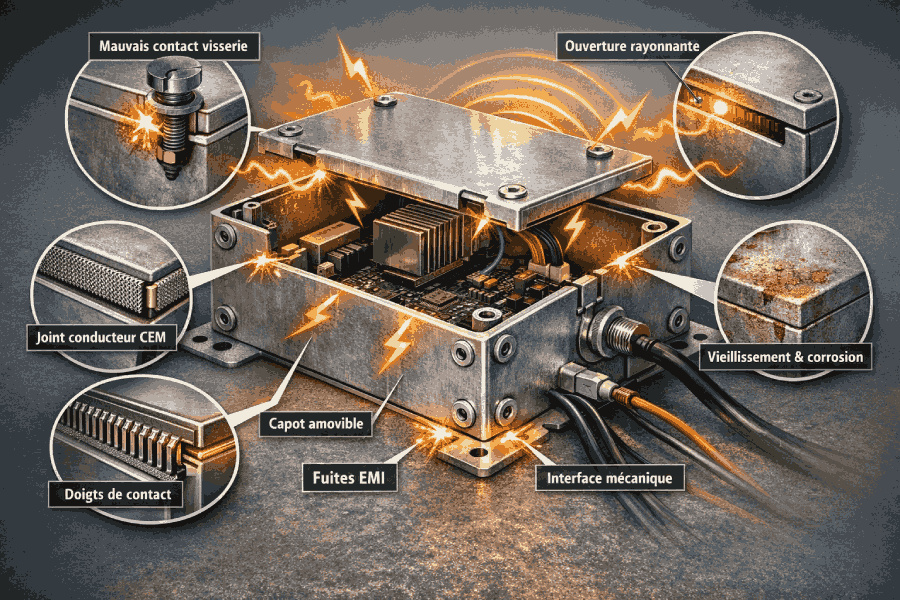
How to keep the EMI shielding of a metal enclosure continuous
Why a metal enclosure is not automatically a good EMI shield: where it leaks, what surface finishes do to contact, and which parts restore continuity.
Read more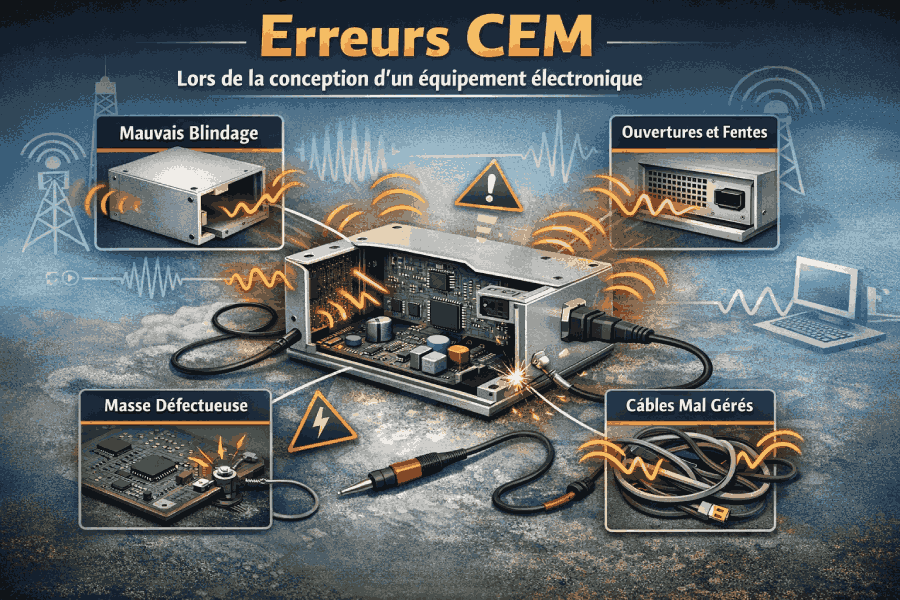
The most common EMC mistakes when designing electronic equipment
Why EMC is often dealt with too late, and five frequent design mistakes: shielding continuity, openings, grounding, cables and mechanical interfaces.
Read more
EMC in practice: automotive, medical, aerospace and defence examples
Examples of electromagnetic interference and how EMC is handled in four sectors: automotive, medical, aerospace and defence. With a note on RTCA DO-160.
Read more
EMC testing: how electronic equipment is checked before it goes on the market
How EMC testing works: emission and immunity tests, the standards behind them, what the EMC Directive really requires, and what to do when a product fails
Read more
Electromagnetic shielding: what it is for and how it works
What electromagnetic (EMI) shielding does and how it works: the Faraday cage, shielding effectiveness in dB, the main shielding materials and their limits.
Read more
What is EMC? Electromagnetic compatibility and interference (EMI) explained
What electromagnetic compatibility (EMC) means, where interference (EMI) comes from, and how design, shielding and testing keep electronics working together
Read moreUnderstanding EMC, EMI and thermal issues in electronic equipment
Our articles explain test methods, the principles of EMI/RFI shielding and the most common design mistakes. They are written for people who design or buy: each one starts from a concrete case, an enclosure that leaks, a failed test, a surface finish that insulates, and says what to check.
To go from theory to hardware, you can also browse our EMI gaskets by type, the page that brings together the shielding gaskets and thermal pads these articles talk about.
To find out more about ElectroDome, visit our home page.