EMI gaskets by type and material, and thermal pads
Five product families
ElectroDome, supplier of EMI shielding gaskets, offers five families to close an enclosure electrically and take the heat out of it: conductive silicone gaskets, fabric-over-foam gaskets, knitted wire mesh gaskets, finger stock and thermal pads. Each one is cut or formed to your drawing. If you would rather start from your trade than from the product, see the industries we work with.
Our EMI gaskets and thermal pads
Each product page gives its materials, its dimensions and its shielding figures.
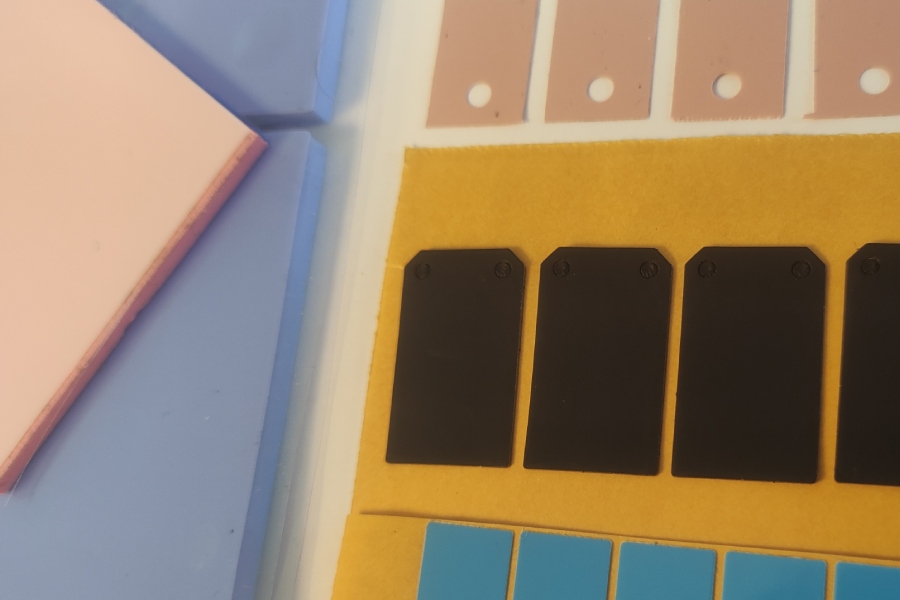
Silicone thermal pad – thermally conductive gap filler
Silicone thermal pads from 3 to 5 W/m·K, 0.3 to 15 mm thick and electrically insulating. Standard sheets or custom-cut parts, with samples before you order.
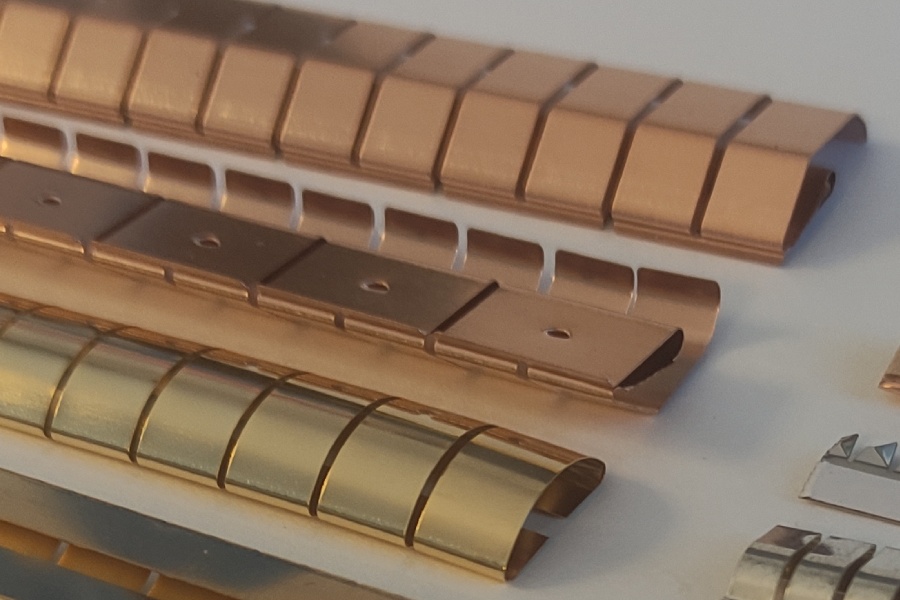
Beryllium copper finger stock gaskets for EMI/RFI shielding
Beryllium copper finger stock for EMI/RFI shielding of doors, panels and racks: clip-on, adhesive, soldered or riveted strips, plated to suit, made to drawing
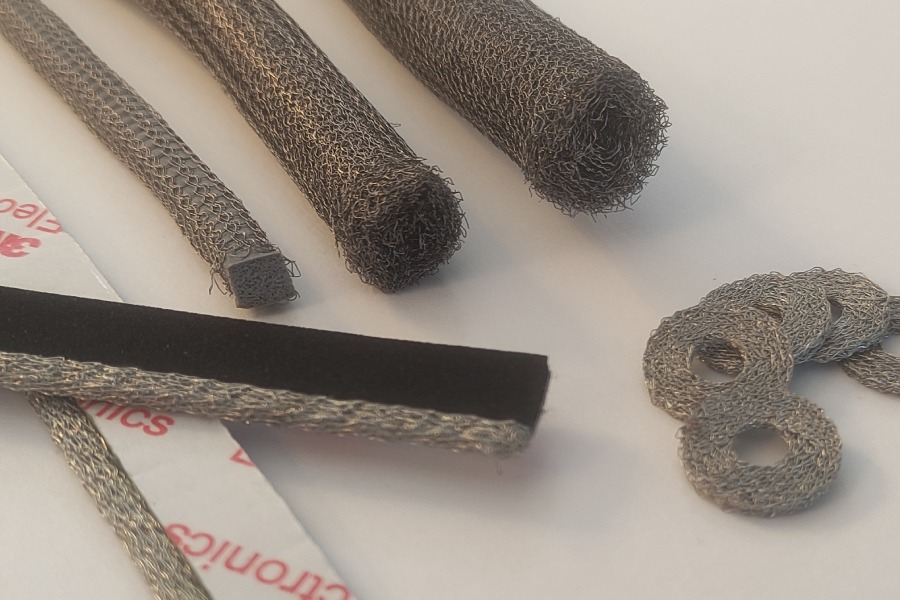
Knitted wire mesh gasket for EMI/RFI shielding
Knitted wire mesh EMI gaskets in Monel, tin-plated copper-clad steel, phosphor bronze or stainless steel: all-metal, elastomer-cored or with a seal, cut to size
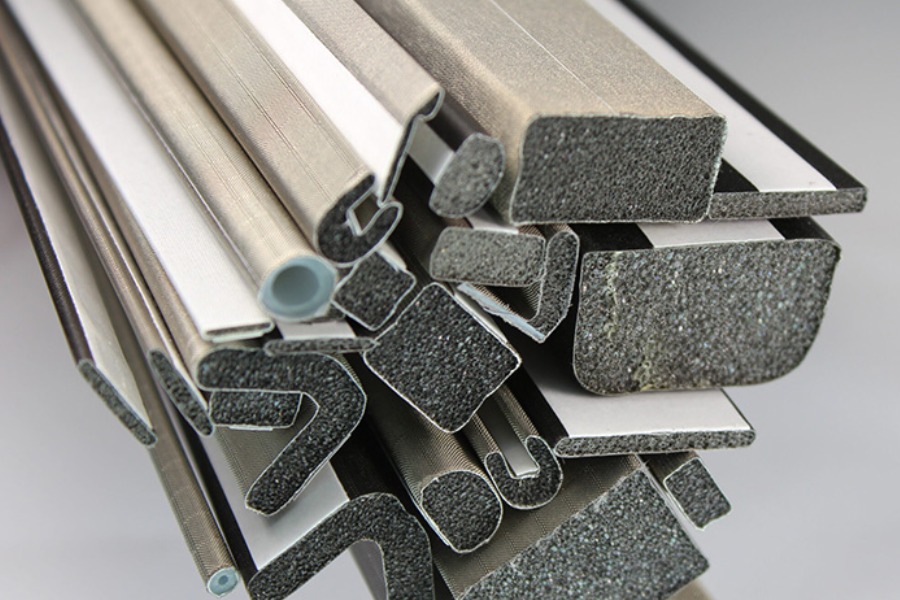
Fabric-over-foam (FOF) gasket for EMI shielding
Fabric-over-foam (FOF) EMI gaskets: nickel-copper fabric over polyurethane foam, 60 to 100 dB, UL94 V-0, low closing force. Strips, D and C profiles, I/O parts.
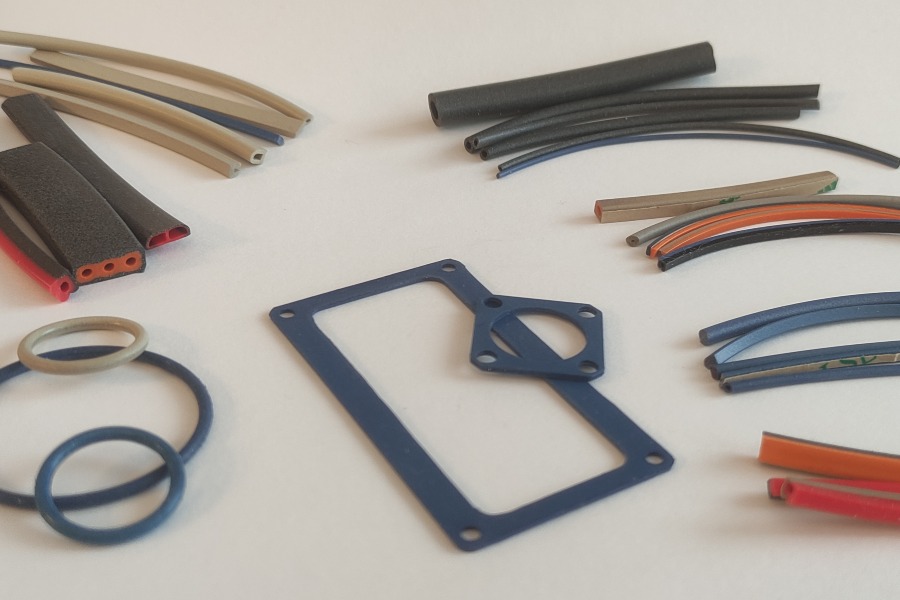
Conductive silicone gasket for EMI shielding and sealing
Conductive silicone gaskets for EMI shielding and sealing: 40 to 110 dB, −55 °C to +200 °C, seven conductive fillers. O-rings, extrusions, sheets and cut parts.
Which EMI gasket for which job?
Three questions usually settle it. Does the joint also have to keep out water and dust? Then a conductive silicone gasket. Is it opened every day? Finger stock. How much closing force do you have? With a thin or plastic cover, fabric-over-foam, which compresses with almost no force; with a cover screwed down once on uneven flanges, knitted wire mesh. And when the problem is heat, a thermal pad between the component and the housing.
The range is used in very different settings: on-board systems in aircraft and avionics, hospital and diagnostic devices, vehicle electronics, factory control cabinets, telecom and rail installations and defence systems. The constraints change from one sector to the next; the method does not: start from the metal of the housing, its environment and the standard the equipment has to pass. A sample of 3 pieces then lets you check the fit before the series.