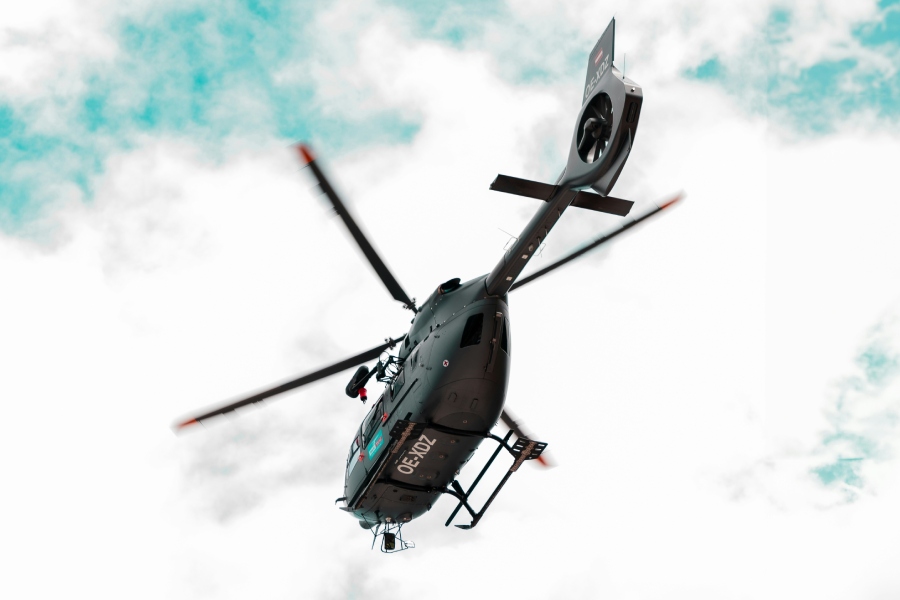
An aircraft carries radios, radar, navigation receivers, flight computers and power converters within a few metres of each other, often in the same bay. Each of them must keep working next to the others, and none may disturb them: that is electromagnetic compatibility (EMC), and on airborne equipment it is tested before anything flies.
Most of the interference that escapes from a metal enclosure, or gets into it, passes through its openings: covers, access panels, connector cut-outs, ventilation. ElectroDome supplies the gaskets that close those gaps electrically, and the thermal pads that carry heat away from the electronics inside. This page shows which product suits which part of an avionics assembly.
✈️ Where shielding and thermal materials are used
- Avionics enclosures and flight computers: cover and panel seams, connector interfaces.
- Radar, radio and navigation units: keeping transmitters and sensitive receivers apart.
- Racks and electronics bays: doors, drawers and plug-in modules opened for maintenance.
- Cabin and in-flight systems: light enclosures where weight and closing force are limited.
- Helicopters and UAVs: compact electronics, close to motors and transmitters, in a vibrating airframe.
- Power electronics: converters and control modules that must shed heat in a sealed box.
🔧 Which product for which job
Conductive elastomer gaskets
One part that shields and seals. Conductive elastomer gaskets in silicone cover −55 °C up to +125 °C or +200 °C depending on the filler, with 40 to 110 dB of shielding according to the material; a fluorosilicone version adds chemical resistance. They are the usual answer for enclosures exposed to moisture, and for connector and flange seals.
Beryllium copper finger stock
For anything opened often: access hatches, rack doors, drawers, plug-in units. Beryllium copper finger stock closes with very little force, springs back after each opening and reaches up to 100 dB at 25 % compression. It shields but does not seal, so it belongs inside the equipment bay rather than on an exposed skin.
Knitted wire mesh gaskets
All-metal or knitted over an elastomer core, knitted wire mesh gaskets give over 100 dB depending on the alloy and the frequency, and accept flanges that are not perfectly flat. The wire (Monel, tin-plated copper-clad steel, aluminium on request) is chosen to match the metal of the housing and limit galvanic corrosion, a point that matters on aluminium airframe equipment.
Fabric-over-foam gaskets
Light, soft and rated UL94-V0: fabric-over-foam (FOF) gaskets suit cabin equipment and electronics housed in a protected bay, where the covers are thin and the closing force is low. They are indoor gaskets: for an enclosure exposed to weather or fluids, choose a conductive elastomer.
Silicone thermal pads
Sealed avionics boxes have little airflow, so the heat has to leave by conduction. Silicone thermal pads at 3 or 5 W/m·K fill the gap between a component and the housing or heat sink; they are electrically insulating, rated UL 94 V-0 and work from −40 °C to +220 °C.
📐 DO-160 and MIL-STD-461: what they are
Two documents come up in almost every aerospace enquiry. RTCA DO-160 (published in Europe as EUROCAE ED-14), Environmental Conditions and Test Procedures for Airborne Equipment, sets out the tests applied to airborne equipment: temperature, altitude, vibration, and, among its EMC sections, the emission of radio-frequency energy and the susceptibility to it. MIL-STD-461, a United States Department of Defense standard, sets the requirements for the control of electromagnetic interference of military equipment and subsystems, in conducted and radiated emissions and susceptibility.
Both apply to the finished equipment: the tests are passed by the enclosure as built, with its seams, its compression and its surface finish. A well-chosen shielding material contributes to that result. We give you the data of the material (shielding effectiveness, temperature range, type of filler or alloy) so that you can choose it and validate it in your own tests.
🛠️ Made to your specification
Aerospace parts are rarely catalogue parts. Tell us the housing metal and its finish, the temperature range, the fluids present, the gap and the closing force available, and the frequencies you need to attenuate; we propose the reference that fits, cut or formed to your drawing, with its datasheet attached to the quote. Small series and prototype quantities are part of the normal run of orders.
🤝 Working with ElectroDome
- One supplier for EMI shielding and thermal interface materials, based in Paris, answering in English or French.
- Materials from certified suppliers, with traceability and a check before delivery.
- A sample before you commit: 3 pieces, prepared for your application.
- Technical data given as it is: indicative values, confirmed on the quote for the reference proposed.
❓ Frequently asked questions
Which EMI gasket for an avionics enclosure?
If the enclosure must also keep out moisture, a conductive elastomer. If it is a door or drawer opened often inside a bay, finger stock. For uneven flanges or all-metal joints, knitted wire mesh. For light covers in the cabin, fabric-over-foam.
What is the RTCA DO-160 standard?
The reference document for environmental and EMC testing of airborne equipment, published by RTCA and, in Europe, by EUROCAE as ED-14.
What is MIL-STD-461?
A United States military standard that sets the limits and requirements for electromagnetic interference of equipment and subsystems. Many civil programmes use it as a reference too.
Can your gaskets be used in equipment tested to DO-160 or MIL-STD-461?
Yes: they can contribute to the compliance of the equipment. These standards qualify the finished equipment, so the result is confirmed by your own tests, and we provide the material data you need for them.
Do you supply for UAVs and helicopters?
Yes. The needs are the same as on larger aircraft, in less space: light gaskets, low closing force and heat removal from sealed electronics.
Can I get a sample or a small quantity?
Yes: a sample of 3 pieces, then prototypes or series. Availability and lead time depend on the reference and are confirmed on the quote.
Characteristics and values are given for guidance only. See our terms of sale for details. For any critical application, please contact us.